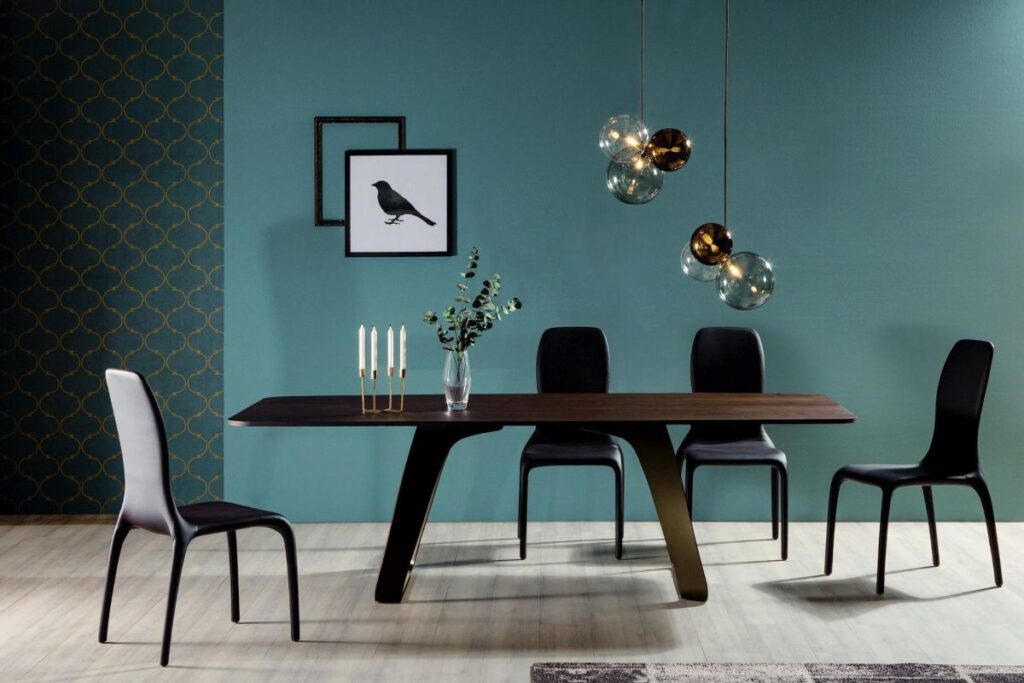

To fit a dining table in a small living room, choose a compact or round table, place it against a wall or in a corner, use foldable or extendable tables if needed, and opt for slim chairs to maximise space and maintain easy movement.
Living in a compact flat or a smaller house often means being creative with how you use your space. One of the biggest challenges people face is fitting a dining table into a small living room. On one hand, you need a dedicated place to eat, work, and socialise. On the other hand, you don’t want your living area to feel overcrowded, cramped or chaotic.
The good news is that fitting a dining table into a small living room is completely possible. You do not need to sacrifice style or comfort. With clever planning, smart furniture choices and a little bit of design creativity, your small living room can become a multifunctional, beautiful and perfectly practical space.
This detailed guide will walk you through everything you need to know, from choosing the right table size to arranging your layout and making your room feel bigger than it is.
Understand Your Living Room Layout First
Before you buy any table or start moving furniture around, the most important step is to understand the actual layout and dimensions of your living room. Many people make the mistake of guessing or eyeballing the space, which usually leads to buying furniture that is either too big or awkward to place.
Take a measuring tape and note down:
- Total length and width of your living room
- Position of doors and windows
- Placement of radiators, sockets and light switches
- Areas where people walk through
- Size and position of your sofa and TV unit
Once you have the measurements, draw a quick sketch of the room. This step alone gives you clarity on where a dining table could realistically fit without blocking movement.
Choose the Right Size Dining Table
The size of your dining table will make or break your layout in a small living room. In compact spaces, less is always more. Instead of trying to fit a full-size family dining table, go for something that matches your daily needs.
Here is a helpful guide for small living rooms:
- 2-seater table: around 60–80 cm wide
- 4-seater small table: around 90–120 cm long
- Round table: 80–100 cm diameter
- Drop-leaf table: folds down when not in use
If you live alone or with one other person, a small 2-seater or round table is often more than enough. You can always add foldable chairs when guests come over.
Consider Round or Oval Tables Instead of Square Ones
Square and rectangular tables are popular, but they can feel bulky in small living rooms. Round and oval tables are often a better choice because they take up less visual space and allow people to move around more easily.
Benefits of a round dining table in a small room include:
- No sharp corners taking up space
- Smoother flow for walking around
- Better use of awkward corners
- Creates a cosy, intimate eating area
Round tables are also great for placing in corners, by windows, or near a wall without looking forced.
Use a Wall, Corner or Window Area Wisely
One of the smartest ways to fit a dining table into a small living room is by placing it against a wall or in a corner. Not every dining table needs to be in the centre of the room.
Great placement ideas include:
- Against one wall like a console-style table
- By a window to create a breakfast nook
- In a corner with a corner bench or L-shaped seating
- Behind a sofa in an open-plan layout
- Beside the kitchen entrance, if space allows
Using a wall or corner allows you to keep maximum open floor space for walking and relaxing.
Try Foldable and Extendable Dining Tables
When space is limited, flexibility becomes your best friend. Foldable and extendable tables are designed specifically for small spaces and are perfect for living rooms that serve multiple purposes.
- Drop-leaf tables fold down when not in use
- Wall-mounted tables can be folded up completely
- Extendable tables open up only when guests arrive
- Nesting tables can be stacked and separated
This type of furniture keeps your living room feeling spacious most of the time, while still providing a proper dining space whenever you need it.
Choose the Right Chairs for a Small Living Area
The wrong chairs can make even a small table feel enormous. Bulky dining chairs take up unnecessary room and visually clutter the space. Instead, choose lightweight and compact seating.
- Slim, armless chairs take up less space
- Foldable chairs can be stored away
- Benches can fit under the table when not in use
- Stools can double as side tables
- Transparent or acrylic chairs create an open look
The aim is to keep the floor visible as much as possible, because open floor space makes your room look bigger.
Use Multifunctional Furniture Around the Table
In a small living room, every piece of furniture should serve more than one purpose. This is how you maximise functionality without overcrowding the space.
- Use the dining table as a working desk during the day
- Choose a bench that also has hidden storage
- Place baskets under the table for blankets
- Use stools that can be used as extra seating
- Choose a table with shelves underneath
Multifunctional furniture is the secret to successful small-space living.
Separate the Dining Area Visually (Without Using Walls)
Even if your dining table is in the living room, you can still create a visual separation between eating and relaxing areas. This simple trick makes everything feel organised.
Some easy ways to define the dining zone:
- Place a small area rug under the table
- Hang a pendant light above the table
- Add wall art behind the dining area
- Use different coloured cushions on dining chairs
- Position a tall plant or shelf as a divider
You don’t need physical walls to create a mental boundary in your space.
Choose Light Colours to Keep the Room Feeling Open
Dark furniture can make a small room feel even smaller. If you are shopping specifically for a dining table for a small living room, lighter shades are a better option.
- White or cream tables reflect light
- Light wood makes the room feel airy
- Glass tops create a floating effect
- Pale grey tones look modern and soft
If you already have a dark table, you can balance it with light-coloured chairs, rugs and walls.
Use Vertical Space for Storage
If your living room is small, your walls become incredibly valuable. Instead of using floor space for cabinets, shelves and storage, go vertical.
- Install floating shelves above the table
- Use wall hooks for cups or accessories
- Add a narrow storage shelf next to the table
- Use hanging planters to free up space
This leaves the floor open while still giving you storage for dining items.
Make Sure There Is a Comfortable Walking Space
Even in small areas, comfort and usability are extremely important. Always leave enough space to walk around the table without bumping into other furniture.
As a general guide:
- Leave at least 60 cm behind chairs for movement
- Avoid placing the table directly in the main walkways
- Make sure doors can still open fully
- Keep the centre area free from clutter
If space feels tight, go for a smaller table rather than forcing in a bigger one.
Style the Dining Table Simply
In a small living room, less decoration is more effective. Over-styling the table can make everything look busy.
Keep it simple with:
- A small plant or vase
- A simple table runner
- Neutral placemats
- One or two decorative items only
- Soft lighting, such as a lamp or candle
Minimal styling creates a calm and elegant atmosphere.
Best Dining Table Shapes for a Small Living Room
Different shapes serve different purposes. Here’s what works best in tight spaces:
- Round: Best overall for flow and compact living
- Oval: Good for narrow rooms
- Square: Only if the room is balanced
- Rectangle: Best when placed against a wall
- Folding: Best for extreme space saving
Your room shape should guide your choice.
Blending the Dining Area with Living Room Décor
Your table should feel like a natural part of the living room, not an awkward add-on. Match it with the existing décor.
- Use matching colour tones
- Choose similar materials (wood, metal, fabric)
- Match chair style with sofa style
- Use cushions that link the two areas
Interior designers, including top creative spaces such as The Home Designer, often recommend maintaining a consistent design flow throughout multi-purpose rooms.
Final Thoughts
A small living room does not mean you have to give up the idea of having a dining area. It simply requires smarter choices, creative thinking and a focus on flexibility. The right dining table, thoughtfully placed, can actually enhance your space rather than cramp it.
By choosing compact furniture, making use of corners and walls, embracing foldable solutions and keeping your layout minimal, your living room can become a comfortable, functional and stylish place for both relaxing and dining.
Small spaces don’t limit your lifestyle, they challenge you to design it better.
Frequently Asked Questions
Where should I place a dining table in a small living room?
The most practical places are against a wall, in a corner, near a window, or behind a sofa in open-plan layouts to save space and maintain easy movement.
Is a round or square table better for a small living room?
A round table is often better because it has no sharp corners, improves flow, and visually softens the space, making the room feel larger and less crowded.
Can I use a dining table as a workspace in a small living room?
Yes, a compact dining table works perfectly as a dual-purpose desk and eating area, making it ideal for small living rooms where multifunctional furniture is essential.
How do I make a dining area look separate in a small living room?
You can visually separate it by placing a small rug under the table, using a pendant light above it, adding wall art, or positioning a plant or shelf as a soft divider.