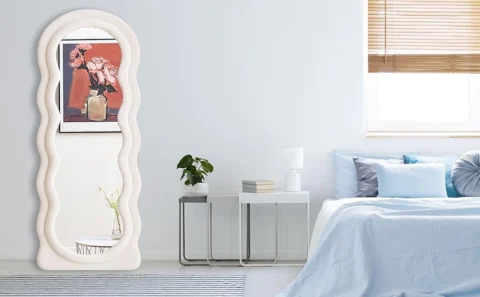
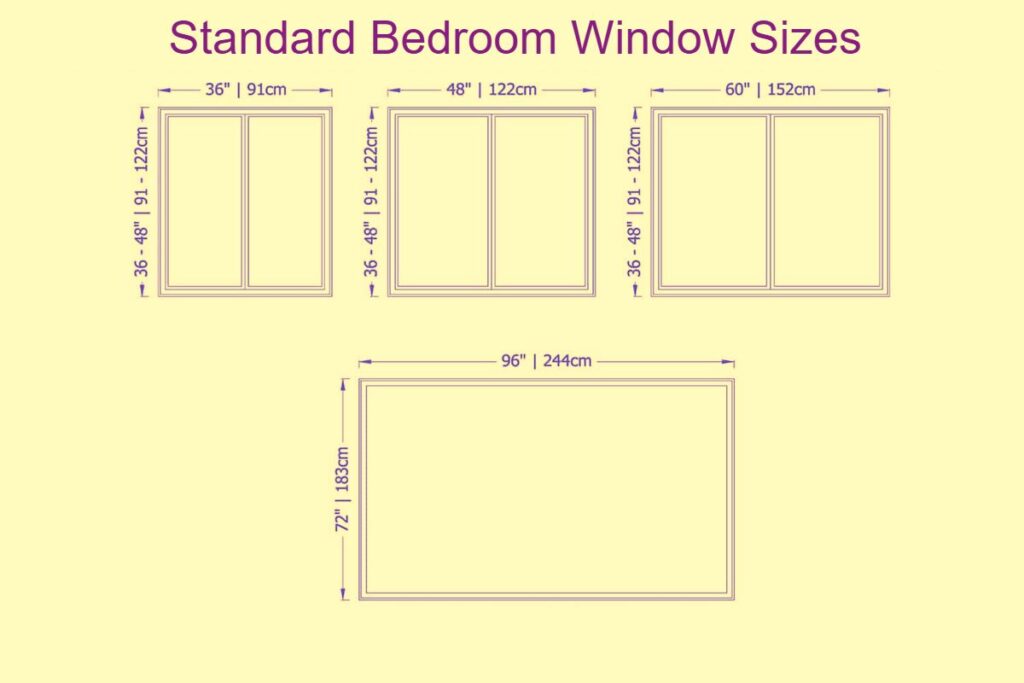

Standard bedroom window size is usually between 60 cm to 120 cm wide and 90 cm to 150 cm high. In most homes, the common size is around 90 cm × 120 cm or 120 cm × 120 cm. In feet, this equals approximately 3 ft. × 4 ft. A Small Bedroom typically uses a smaller window for space efficiency, while a Master Bedroom can support a larger window, such as a Sliding Window, Casement Window, or even a Bay Window for extra light and ventilation.
Choosing the right window size for a bedroom is more important than many homeowners realise. Windows are not just decorative features. They play a vital role in bringing in natural light, allowing ventilation, creating a sense of space and contributing to the overall comfort and energy efficiency of a room. Whether you are designing a new home, renovating an old property, or simply replacing an existing window, understanding the standard bedroom window size is essential for making the right decision.
In this guide, we’ll explore the most common bedroom window sizes, including the standard bedroom window size in cm, in feet, and in the UK, along with practical considerations for a Small Bedroom and a Master Bedroom. We’ll also look at popular window types such as the Sliding Window, Sash Window, Casement Window, Bay Window, and Bow Window, and how their dimensions might differ.
Understanding the importance of the standard bedroom window size
Window size affects much more than the way your bedroom looks. The amount of sunlight entering the room influences your mood, productivity and sleep quality. Proper ventilation also improves indoor air quality, helping to reduce excess moisture that could lead to mould. In the UK, window size is also linked to building regulations, particularly where bedrooms are concerned, because of safety, ventilation and natural light requirements.
While there is no single fixed size for all bedrooms, most properties follow general standards that suit the average room dimensions. These standards help builders, architects and homeowners maintain consistency and practicality across residential designs.
Standard bedroom window size in the UK
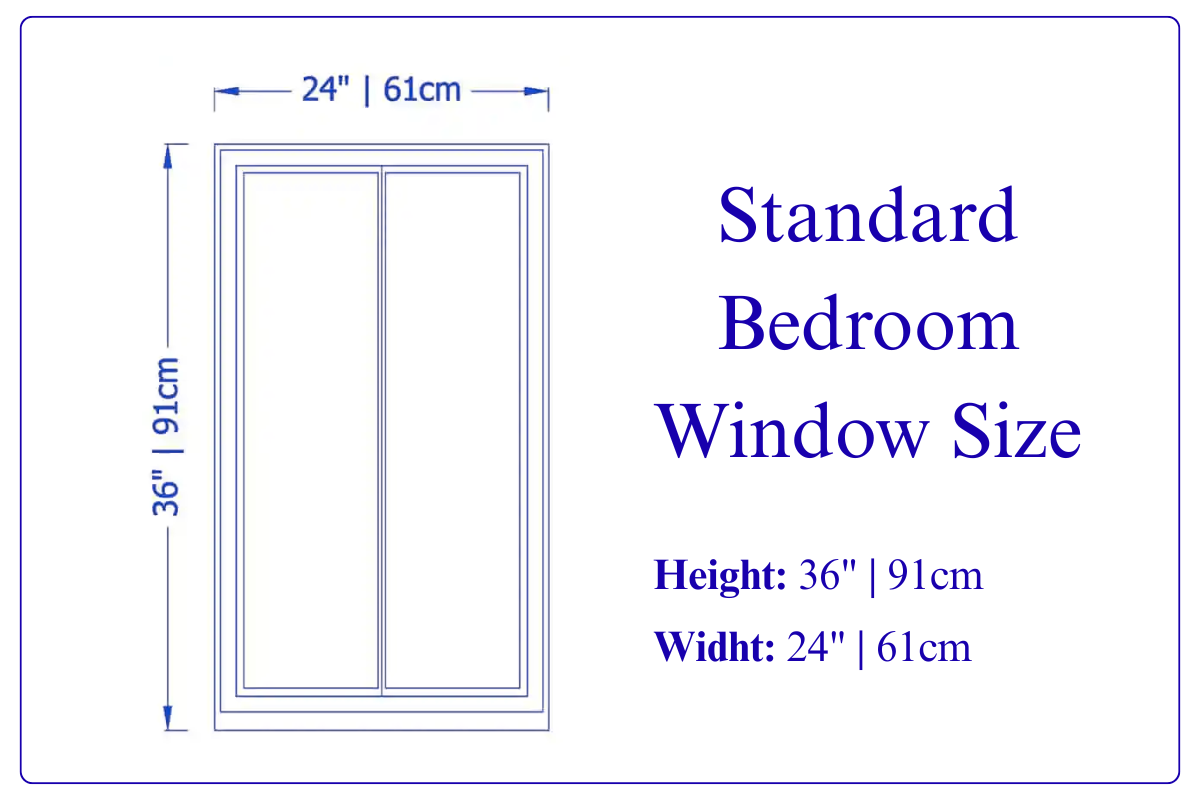
When talking about the standard bedroom window size in UK homes, the most commonly found dimensions usually fall between:
- Width: 60 cm to 120 cm
- Height: 90 cm to 150 cm
These sizes are popular because they allow enough daylight to enter the room while still offering privacy and wall space for furniture such as wardrobes and beds.
In many British homes, especially modern builds, a typical bedroom window may measure around:
- 900 mm × 1200 mm
- 1000 mm × 1200 mm
- 1200 mm × 1200 mm
This means the standard bedroom window size in cm is between 90 x 120 cm and 120 x 120 cm. Of course, the exact size will vary based on the layout of the house, the room size and the personal preferences of the homeowner.
Standard bedroom window size in feet
If you prefer measurements in imperial units, the standard bedroom window size in feet is generally between:
- 2 ft. to 4 ft. wide
- 3 ft. to 5 ft. tall
A very common size you will see in many British bedrooms is approximately 3 ft. x 4 ft. Larger windows in a Master Bedroom may be around 4 ft. x 5 ft. or even wider if the property allows for more natural light and open views.
These measurements provide a useful guide when discussing options with builders or window suppliers.
Window size for a Small Bedroom
A Small Bedroom needs careful planning to avoid making the space feel cramped or dark. Installing a window that is too large can reduce wall space and limit furniture placement. On the other hand, a window that is too small may not let in enough light, making the room feel gloomy and uncomfortable.
For smaller bedrooms, a typical and practical choice would be a window in the range of 60 cm to 90 cm in width and 90 cm to 120 cm in height. These dimensions offer a balanced amount of daylight without overwhelming the limited wall space.
A well-placed window combined with light wall colours and minimal window dressings can make even a small bedroom feel open, airy and welcoming.
Window size for a Master Bedroom
A Master Bedroom generally has more floor space, which means you can afford to be more generous with your window size. Many homeowners prefer larger windows in the master bedroom to create a luxurious and relaxing atmosphere.
In such rooms, you may see window sizes ranging from 120 cm to 180 cm in width and 120 cm to 150 cm in height. Some modern homes even use wide or floor-to-ceiling window designs, especially if the bedroom faces a garden, balcony or scenic view.
Larger windows in a master bedroom enhance ventilation, brighten the room naturally and create a stronger connection with the outdoors.

How the window type affects bedroom window size
The type of window you choose can significantly influence the overall size and appearance of your bedroom.
Casement Window
A Casement Window is one of the most popular choices in UK homes. It usually opens outwards and is hinged from the side. This window type is available in a wide variety of sizes, but in bedrooms, standard options often sit around 60 cm to 100 cm wide and 90 cm to 120 cm tall.
Casement windows are highly practical because they are easy to open, provide excellent airflow and seal tightly when closed.
Sliding Window
A Sliding Window operates by sliding one pane over another. This type of window is often larger in width than height. In bedrooms, a sliding window may measure anywhere from 100 cm to 180 cm wide and 90 cm to 120 cm tall.
They are ideal for modern designs and work well in rooms where you don’t want the window to swing inward or outward, such as near furniture.
Sash Window
A Sash Window is a classic British design that moves vertically. These are commonly found in period properties, townhouses and traditional homes.
The standard sizes for a sash window in a bedroom can range from 60 cm to 100 cm wide and 120 cm to 150 cm tall. They add character and charm to both small and large bedrooms and are a great choice if you are trying to maintain a traditional look.
Bay Window
A Bay Window extends outwards from the wall, creating a small alcove inside the room. This type of window is usually larger and is often used in a Master Bedroom to create a seating area or provide panoramic outdoor views.
Bay windows can vary greatly in size, but common widths range from 150 cm to 300 cm, with a height of 120 cm to 150 cm. While they are not suitable for every property, they make a dramatic and beautiful feature in a bedroom.
Bow Window
A Bow Window is similar to a bay window, but instead of sharp angles, it has a curved structure formed by multiple window panels. This style is elegant and allows even more light into the bedroom.
Bow windows are generally wider than standard window types and are often seen in larger bedrooms. Widths can start at around 180 cm and go up to 400 cm, depending on the design.
Glazing, ventilation and safety considerations
In the UK, building regulations require that certain minimum standards be met when installing new windows in a bedroom. These standards relate to ventilation, insulation and safety. For example, in some scenarios, the window needs to be large enough to act as an emergency escape route.
Double glazing or triple glazing is often recommended for bedrooms, as it improves insulation, reduces outside noise and helps maintain a comfortable temperature. The size of the window will influence how effective the glazing is, so it’s important to select dimensions that support both comfort and energy efficiency.
The Home Designer, often take all these factors into account when advising on the best window size and type for a specific bedroom layout.

How to choose the right standard bedroom window size for your home
To find the most suitable standard bedroom window size in cm or in feet for your own space, ask yourself the following questions:
How big is the bedroom?
A Small Bedroom will need a modest-sized window, while a Master Bedroom can handle a much larger one.
Where is the room positioned?
A north-facing bedroom may benefit from a larger window to maximise natural light, whereas a south-facing room might need shading or smaller openings to prevent overheating.
What style of window suits your home?
Decide whether a Casement Window, Sliding Window, Sash Window, Bay Window or Bow Window best matches the architecture and interior design of your property.
How much privacy do you need?
Bedrooms facing the street or neighbouring properties may require slightly smaller windows or higher placements to maintain privacy.
What is your budget?
Larger and more complex window types generally cost more, so it’s important to balance aesthetics with affordability.
Benefits of choosing the right standard size
Selecting the correct standard window size offers many advantages:
- Improved natural lighting throughout the day
- Better airflow and healthier indoor environment
- Enhanced visual appeal of the bedroom
- Increased property value
- Greater energy efficiency and lower bills
A correctly sized window makes the bedroom more inviting, functional and in harmony with the rest of the home.
Final thoughts
The standard bedroom window size is not a single fixed measurement but rather a range of recommended dimensions based on room size, design and UK building practices. Whether measured in cm, in feet, or described as the standard size in UK homes, the key is to find a balance between light, ventilation, privacy and style.
From compact windows in a Small Bedroom to wide, elegant designs for a Master Bedroom, and from classic Sash Windows to modern Sliding Windows and impressive Bay Windows and Bow Windows, there are options to suit every type of home.
By understanding these standards and considering your personal needs, you can confidently choose the perfect window size that enhances both the comfort and beauty of your bedroom.
Frequently Asked Questions
What is the standard bedroom window size in cm?
The standard bedroom window size in cm typically ranges from 90 cm x 120 cm to 120 cm x 120 cm. Larger bedrooms, such as a master bedroom, may use windows up to 150 cm x 150 cm, depending on the layout.
What is the standard bedroom window size in feet?
In feet, the standard bedroom window size is usually between 2 ft. and 4 ft. wide and 3 ft. to 5 ft. tall. A common size found in UK homes is 3 ft. x 4 ft.
Is a bigger window better for a master bedroom?
Yes, a Master Bedroom usually benefits from a bigger window because it allows more daylight, better airflow and a more open feel. Popular options include sliding windows, bay windows and bow windows for larger, brighter spaces.
Which window type is best for a small bedroom?
For a Small Bedroom, a casement window or sliding window is usually the best choice. These designs save space, provide good ventilation, and allow enough natural light without taking up too much wall area.